ASU EPICS // TIGER MOUNTAIN FOUNDATION // JUNE 2026
A sub-$100-per-unit target met 115°F heat. I redesigned the path forward.
Working within a three-person ASU EPICS team, I developed the project's research, system architecture, technical analysis, and final deliverables. When Tiger Mountain Foundation's budget proved insufficient for commercial climate control, I split the recommendation into a measurable pilot plan and a separately funded procurement path.
Project lead and sole technical contributor responsible for the research, system architecture, technical analysis, and written deliverables.
- Partner
- Tiger Mountain Foundation
- Program
- ASU EPICS Summer Design
- Team
- Zayd Krunz, Jackson Petersen, Ethan Nojaim
01 // THE BRIEF
One brief. Three demands that could not all be true.
The target combined prototype-level spending with commercial-level performance. Treating those as the same project would have produced a flimsy build and worse advice.
per unit in the original brief
ambient peak conditions
of greens and herb production
02 // THE STRATEGY
Separate cheap learning from full-scale production.
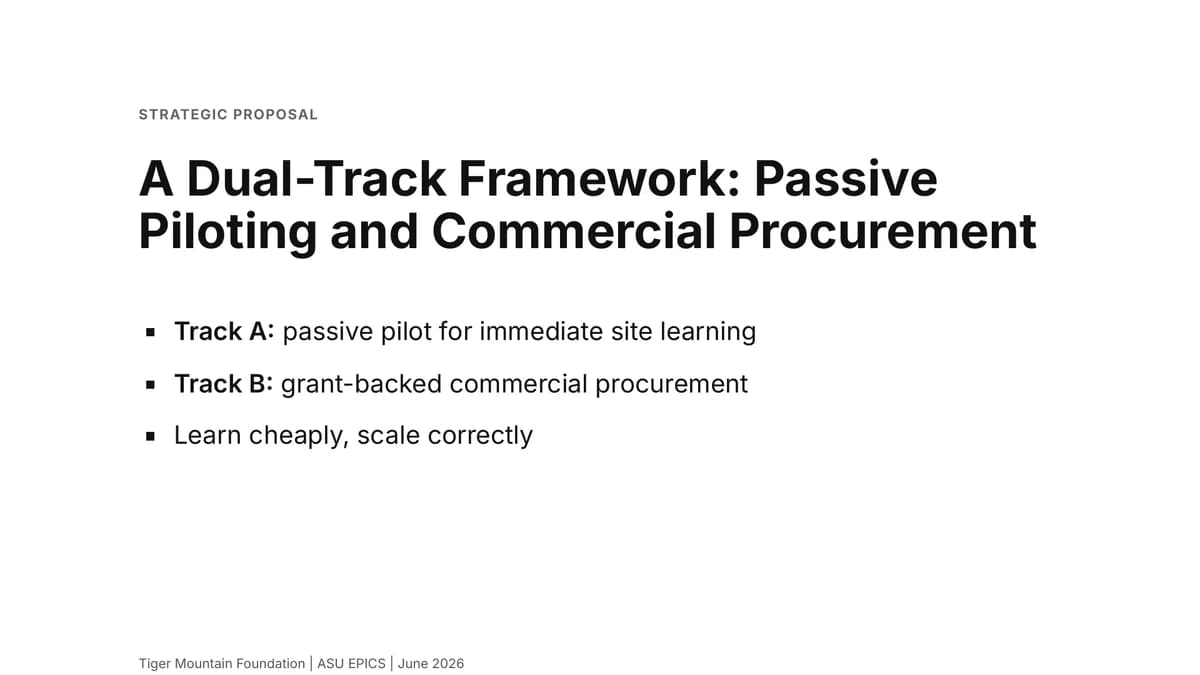
I reframed the work as two connected tracks: one to reduce uncertainty on site, and one to fund and procure the system the original brief actually described.
Measurable passive pilot
Shade the water path, purge hot standing water, buffer the reservoir, and log root-zone temperature, pH, EC, power, and maintenance on one greens-and-herbs module.
BUYS SITE EVIDENCECommercial procurement
Use those measurements to scope vendor quotes, utilities, warranties, training, and grant applications for a proper controlled-environment farm.
BUYS A CREDIBLE CAPITAL PLANTHE REFRAMEThe pilot plan's job was to reduce uncertainty, not impersonate the finished farm.
03 // THE SYSTEM
Reduce the heat load first. Refrigerate only if data says to.
The concept separates water intake, hydroponics, cooling, and electrical controls so each layer can be tested and upgraded independently.
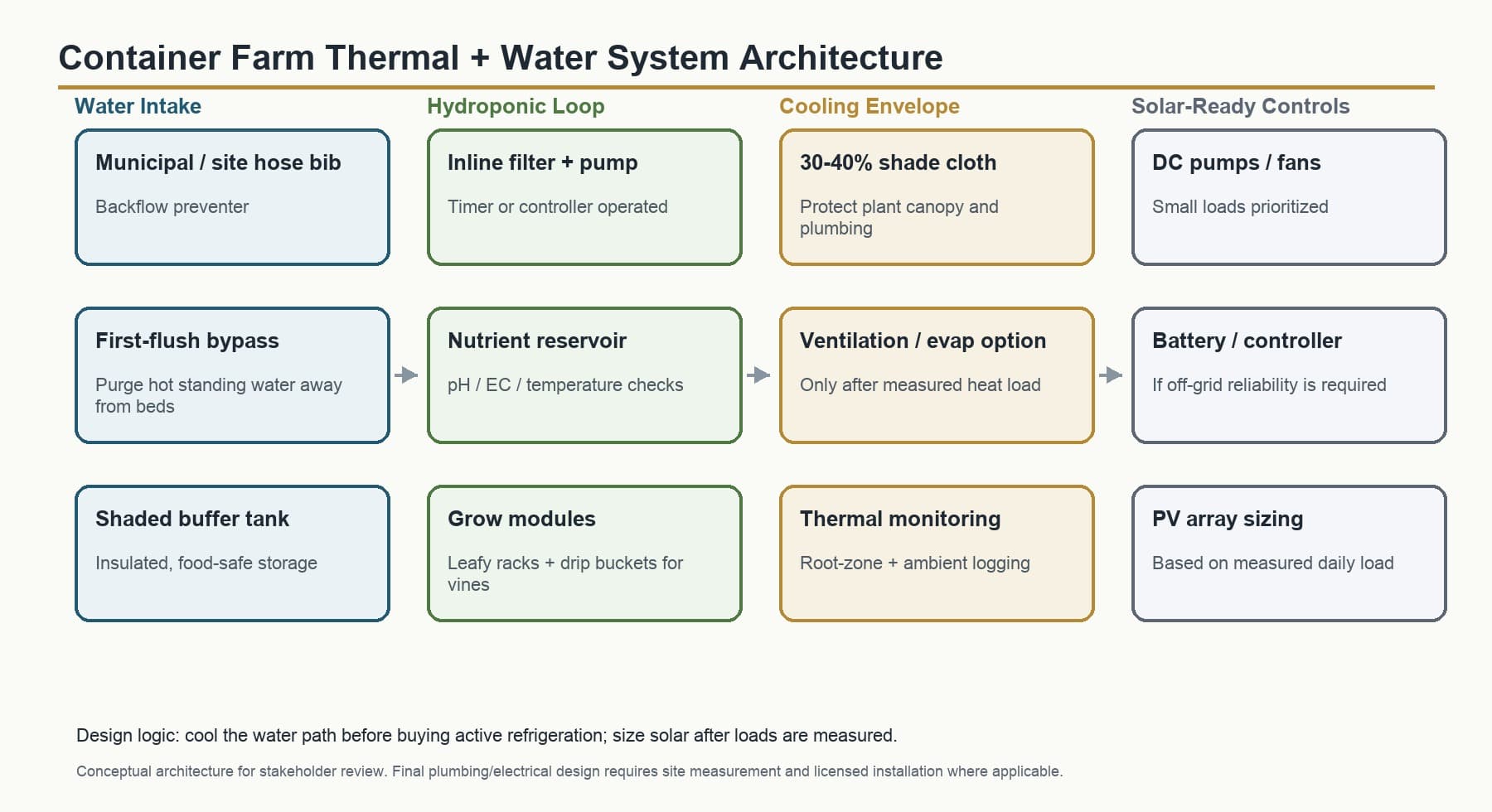
Stop avoidable heat gain.
Shade lines, flush hot water, and buffer the root zone.
Instrument the real system.
Log temperature, water chemistry, power, and labor.
Spend against evidence.
Add active cooling and solar only when the data justifies it.
04 // THE HANDOFF
Enough detail to act without fake precision.
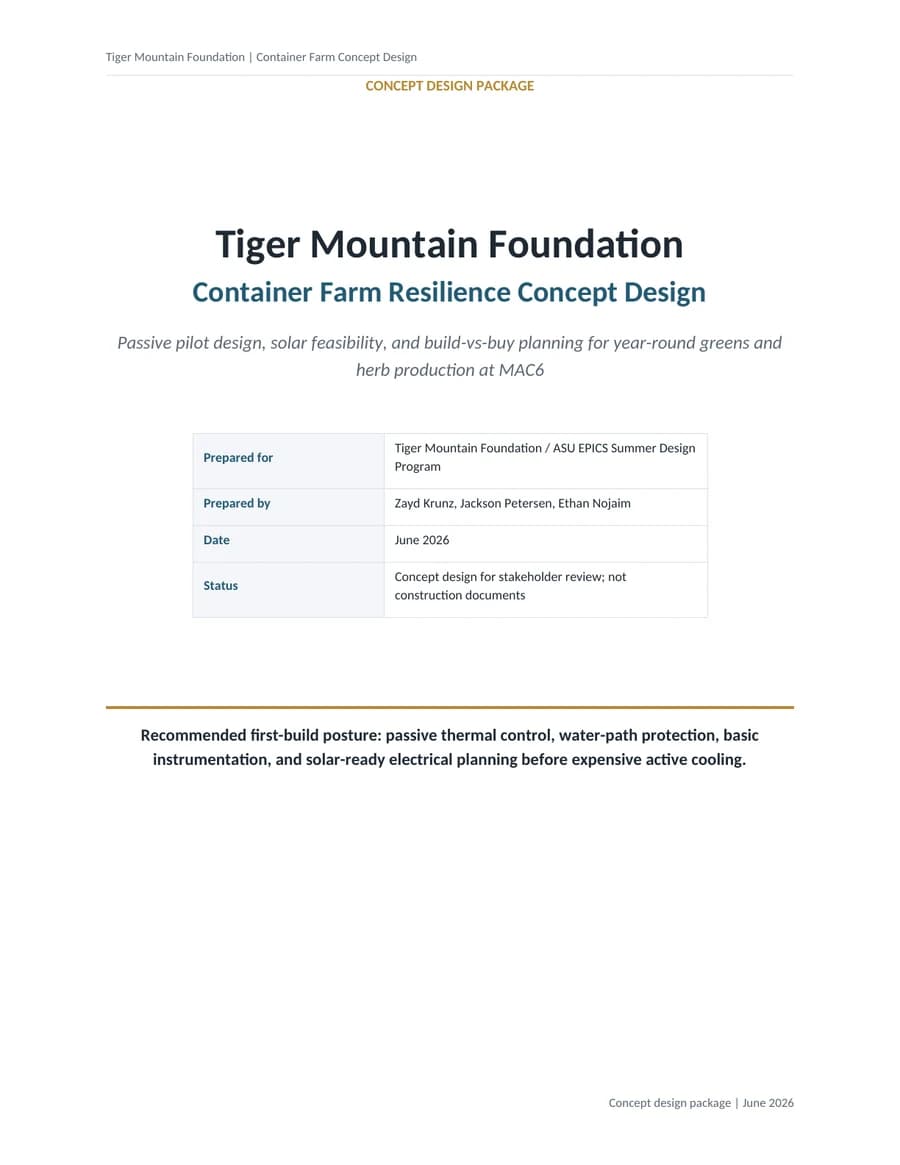
I authored the 12-page concept package and seven-slide recommendation deck, covering thermal controls, crop modules, solar-load logic, procurement gates, phasing, and risk. The three-person EPICS team presented the materials to Tiger Mountain Foundation. Both documents are explicitly concept-level: useful for pilot planning and stakeholder review, not construction.
THE TAKEAWAY
The best engineering answer wasn't a build. It was a sequence.
Protect the system from first-order heat, run a disciplined pilot, and let real site data determine the capital plan. Under impossible constraints, honest scoping creates more value than a doomed prototype ever could.